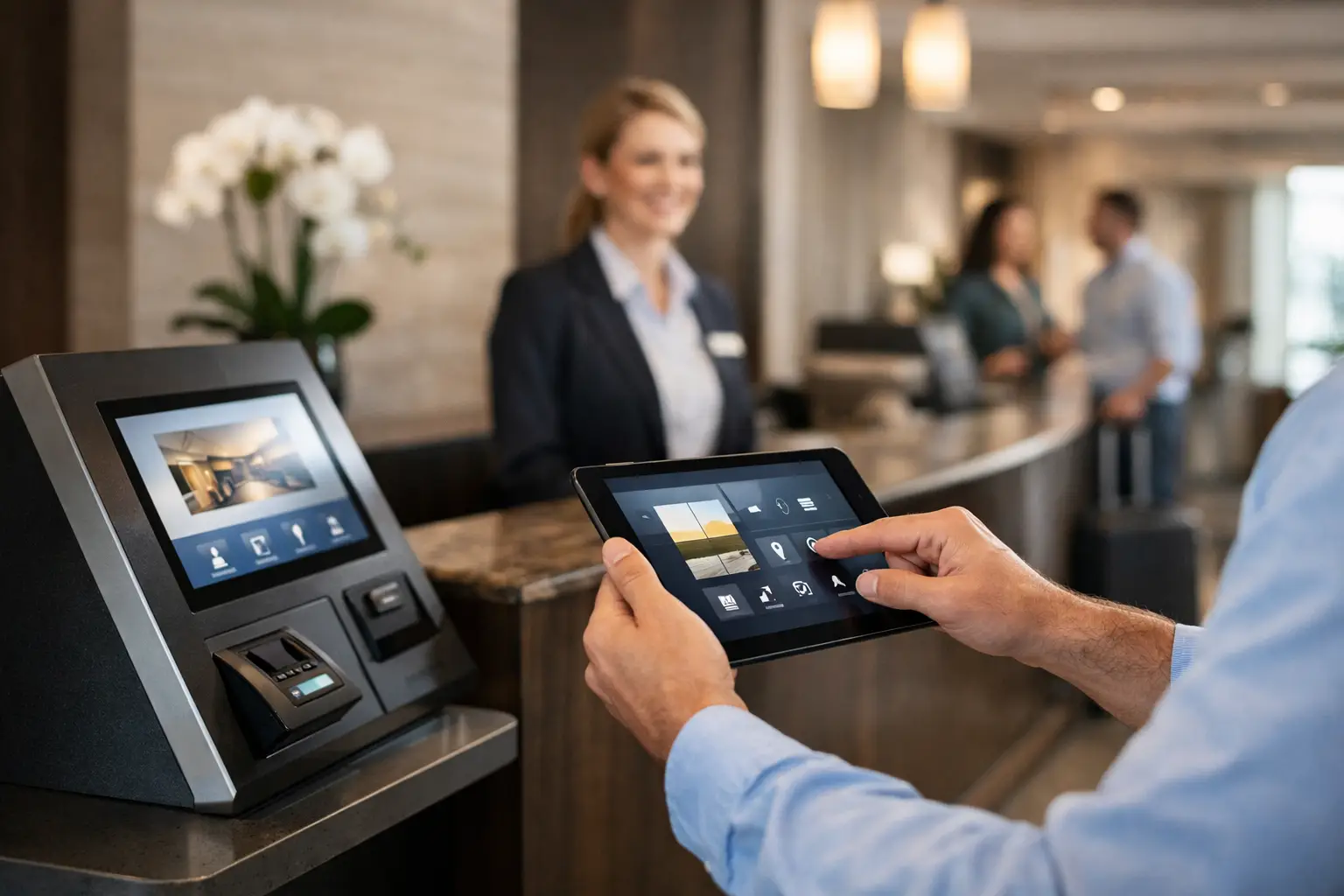
Guest self-service portal software is a secure online interface that allows resort guests and timeshare owners to manage reservations, process payments, and update profile information independently. Within the unified ecosystem of Merlin Software, this feature is delivered through the Merlin Portal—a suite of dedicated, cloud-native web applications that communicate directly with a single central database to eliminate administrative bottlenecks.
That connectivity matters most when the phones are busy, arrivals are stacked, and your team is toggling between disconnected front-desk and back-office tools. A self-service portal is not just a convenience feature. In a modern vacation ownership, fractional club, or HOA environment, it becomes an essential component of the operating model.
What is guest self-service portal software for resorts?
Guest self-service portal software provides a digital gateway for users to complete routine operational tasks without calling or emailing resort staff. Depending on the type of stay, this can include confirming bookings, updating profile details, reviewing ledger balances, making secure payments, submitting pre-arrival information, or requesting housekeeping services.
In a basic technology setup, a generic portal acts merely like an isolated digital front desk form. In a mature system, it is natively connected to the reservation engine, marketing CRM, central accounting ledger, and active staff workflows.
If the portal sits outside the main property management system (PMS), staff still have to rekey data, manually reconcile payments, and push updates to operational teams. When it sits inside a unified platform like Merlin CORE, each consumer action updates the live master record instantly. This real-time synchronization is the baseline standard today’s resort operators should target.
Why do timeshare and resort operators need self-service portals?
Traditional hotels can sometimes get by with lighter guest web tools because their transactional nightly stay patterns are simple. Vacation ownership operations cannot, because they must handle a mix of fixed weeks, floating usage, points structures, fractional entitlements, rental inventory, and maintenance fee accounting across multiple legal entities.
This complexity creates operational friction when guests rely on manual staff intervention for every change:
-
Reservation Updates: Turn into lengthy phone calls.
-
Balance Queries: Become inefficient email chains.
-
Special Requests: Get written down manually at reception and passed to housekeeping late.
The Merlin Portal solves this scaling problem by giving guests a controlled, policy-enforced way to help themselves. The system applies your pre-configured reservation rights, inventory allocation controls, and billing rules directly at the user level, ensuring self-service never results in a loss of corporate oversight.
What features should a resort guest portal include?
The necessary feature set depends on whether you run a traditional hotel, mixed-use resort, timeshare club, or HOA-managed community. Rather than offering a single, generic page, Merlin Software structures the user experience through specialized modular applications:
| Merlin Portal Application | Core Target Audience | Primary Operational Function |
| Member Portal | Timeshare Owners & Points Club Members | Provides complete transparency into personal profile data, ownership contracts, and statement balances. |
| Booking Portal | Floating-Week & Points-Based Owners | Allows owners to book their own stays online in real time using their available reservation rights. |
| Payment Portal | Active Owners & Association Members | Facilitates secure credit card payments for annual maintenance fees and special assessments via a direct bank API. |
| Guest Pay Portal | Short-Term Renters & Incoming Guests | Generates a secure, personalized URL sent via text or email for rapid payment processing without a full account login. |
| Rental Guest / Non-Owner Portal | Traditional Vacation Renters | Enables non-owners to register, book available rental inventory, view balances, and manage repeat stays. |
| Guest Survey Portal | Arriving and Departing Visitors | Automates pre-arrival forms and post-departure satisfaction surveys, feeding data directly back into the resort CRM. |
How do integrated portals reduce resort operational workloads?
Workload reduction comes from removing dozens of small, repetitive tasks that consume employee shifts. By migrating these interactions to an automated interface, each department captures specific efficiencies:
-
Front Desk & Reservations: Spend less time answering status questions, updating profile records, or re-sending confirmation emails.
-
Finance & Accounting: Receive fewer ad-hoc billing calls because owner payments route directly into the central double-entry financial ledger without manual batch processing.
-
Property Operations: Maintenance and cleaning requests submitted through the portal automatically flow into staff-facing tools, such as the Housekeeping Mobile App and Maintenance Mobile App, turning guest notifications into live, trackable field assignments.
This direct data movement creates a major quality control benefit by eliminating the data entry handoffs where human errors typically happen. However, self-service tools only reduce labor costs if they honor your true operational realities. If a portal lets a guest make a change that conflicts with underlying inventory limits or complex ownership rules, it creates cleanup work instead of saving time. This is why self-service must be evaluated as an extension of the full technology stack.
Why do standalone guest portals fail compared to integrated ecosystems?
Standalone portals frequently present a polished user interface to the guest while creating substantial, invisible administrative burdens behind the scenes. Because they are separate from the core PMS, staff are forced to manually sync guest databases, verify financial balances, and move service requests across system boundaries.
Furthermore, standalone website add-ons often lack the contextual awareness required for fractional lodging. They cannot distinguish whether an incoming user is a deeded owner using allocated time, a traditional renter on a promotional package, or a club member leveraging banked points.
[Fragmented Disconnected Architecture]
Standalone Web Portal ──(Manual Upload / Sync Lag)──> Separate PMS ──(Spreadsheet Report)──> Back-Office Ledger

[Unified Merlin Software Architecture]
Merlin Portal (Self-Service) <──[Direct Shared Logic]──> Merlin CORE (Database & Ledger)
The Merlin Ecosystem resolves this fragmentation by running all components on the same underlying architecture. Because the portal shares logic with the central system, it instantly recognizes user status, handles multi-currency transactions, respects split-payment protocols, and honors complex usage rules automatically.
How should operators evaluate guest self-service portal software?
When auditing a portal platform, start by analyzing your highest-volume phone and email inquiries. If the software cannot cleanly automate those specific repetitive tasks—such as processing maintenance fees or verifying floating-week availability—it is not solving your primary operational challenge.
Next, test the software against your unique operational edge cases by asking these four structural questions:
- Can it handle your exact inventory model? Verify if the platform handles fixed time, floating points, split weeks, guest certificates, and non-owner rentals natively.
- Where does the data land immediately? Ensure that profile changes, arrival time updates, and payments show up on staff dashboards in real time rather than waiting for an overnight batch sync.
- Are the access controls secure? Confirm that the system’s permission logic protects sensitive corporate and financial data, ensuring users only see the specific records they are entitled to view.
- Is the registration path simple? Look for features like Merlin’s Registration Portal, which allows new users to create their own digital profiles seamlessly, driving higher customer adoption.
What business results should an integrated resort portal deliver?
An integrated portal should deliver lower inbound call volumes, accelerated pre-arrival check-ins, error-free financial postings, and improved owner satisfaction scores. It will not, and should not, eliminate human interaction entirely. Complex accounts, high-value sales follow-ups, and service recovery moments will always require the judgment of your experienced staff.
Ultimately, the best guest self-service portal software is the one that aligns with how your property actually functions day-to-day under pressure. By deploying a unified solution like the Merlin Portal, you remove the friction of routine admin work, leaving your team fully equipped to focus on high-value guest relations.
Bringing Your Resort Operations Together
Managing a modern resort under pressure requires tools that connect, rather than isolate, your primary departments. By utilizing Merlin Software’s unified cloud-native architecture, the Merlin Portal moves beyond the limitations of generic website add-ons. It ties the owner and guest self-service experience directly into the Merlin CORE database engine, ensuring that reservations, payments, profiles, and property work orders update your central records instantly. This real-time visibility eliminates data duplication, reduces back-office workloads, and gives management absolute operational command over the entire customer journey.
Next Steps: Arrange a Live Demonstration
Stop managing software delays and start running your resort with absolute clarity. Contact Mike Ashton, SVP of Resort Partnerships, to schedule a live demonstration of the platform, or visit easymerlin.com to explore how our ecosystem can optimize your operations.
-
Email: MikeA@quickmerlin.com
-
Phone: +1 246 230 4982
-
Web: easymerlin.com
Frequently Asked Questions
What sets the Merlin Portal apart from a generic guest web portal?
Generic portals function as basic standalone forms that require resort staff to manually copy data over to their property management system. The Merlin Portal is built directly into Merlin CORE, meaning every booking, profile update, or payment updates the master database and back-office accounting ledgers in real time with zero duplicate data entry.
How does the portal handle timeshare owners versus regular rental guests?
The Merlin Portal uses custom web applications tailored to specific user personas. Owners log into the Member or Booking Portals to view usage contracts and reserve floating weeks, while traditional renters use the Rental Guest Portal to browse available inventory and settle balances without accessing owner-specific data.
Can owners pay their annual dues and assessments through the software?
Yes. The Payment Portal provides an integrated, secure interface where owners use a credit card to settle annual maintenance fees or special assessments. This transaction flows via a direct API to your bank, instantly updating the internal double-entry accounting ledger inside Merlin CORE.