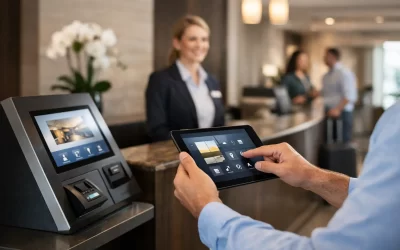
Billing and collections have become one of the most important operational functions within vacation ownership businesses. Rising operating costs, aging owner bases, increasing regulatory requirements, and growing expectations for digital self-service mean resorts can no longer rely on disconnected spreadsheets, manual processes, or legacy financial systems.
This article explores why timeshare billing and collections software has evolved into far more than an invoicing tool. It examines how modern platforms help resorts manage recurring maintenance fees, owner payments, collections activities, accounting integration, and financial reporting within a single connected environment.
You will learn:
- Why billing processes become increasingly complex as resorts mature
- The capabilities that matter most when evaluating billing software
- How integrated collections workflows improve cash control and owner communication
- Why owner self-service portals are becoming essential
- What reporting finance teams, managers, and boards should expect
- How resorts should approach selecting a new system
The article also highlights why integrated, cloud-based platforms such as Merlin Software are helping resorts replace fragmented processes with a single, live view of owner accounts, improving both operational efficiency and the owner experience.
Ultimately, the question is no longer whether resorts need billing and collections software. The question is whether their current systems provide the visibility, control, and flexibility required to support long-term financial stability and owner satisfaction.
Timeshare billing and collections software gives resort operators one controlled process for raising maintenance fees, tracking owner balances, taking payments, and managing follow-up. The right system connects those financial actions to the owner record, contract, reservations, accounting ledger, and staff workflow, so finance teams are not reconciling disconnected spreadsheets at month-end.
For vacation ownership businesses, billing is not a back-office task that can sit apart from operations. A single owner may hold several weeks, points products, or memberships across entities and currencies. Their account can include maintenance fees, levies, rental income, exchange activity, special assessments, payment plans, credits, and adjustments. When these items are split across applications, even a small posting error can create an owner service issue, an inaccurate aging report, or a gap in cash forecasting.
What does timeshare billing and collections software do?
Purpose-built timeshare billing and collections software manages recurring owner charges and the full receivables process from invoice creation through payment allocation, account follow-up, and financial reporting. It should maintain a complete account history while giving authorized staff a current view of what is due, what has been paid, and what action is required next.
At a practical level, the system needs to calculate and issue charges according to the resort’s ownership structure. A fixed-week resort may bill annual maintenance fees by unit and ownership share. A points club may bill membership charges, points-related fees, or different fee categories by product. An HOA-managed property may need to apply assessments and keep the underlying ownership and unit records synchronized.
The operational value comes from treating these as connected processes rather than isolated transactions. When an owner calls the contact center, staff should see the same balance, payment history, invoice detail, and collection status that finance sees. When a payment is taken through an owner portal or by staff, the account should update without waiting for an export and import cycle.
Why do resort billing processes become difficult?
Most billing problems begin with complexity that has accumulated over time. Mature resorts often have multiple ownership products, legacy contracts, varied payment arrangements, and more than one legal entity. Growth adds further pressure: a new property, a new club, another currency, or a new revenue line can force teams to build manual workarounds around a system that was never designed for it.
Legacy, on-premises systems can make this worse. Finance may use one application for invoices and receivables, the front office another for reservations, and customer service a separate CRM record. Staff then spend time confirming which balance is current. Owners receive messages that do not reflect a payment made yesterday, while management waits for manual reports to understand collection performance.
The issue is not simply speed. It is control. If a finance manager cannot trace a charge from the ownership record through the invoice, payment allocation, adjustment, and general ledger entry, investigating exceptions becomes expensive and slow. A cloud-based, integrated platform gives the business a shared record and reduces the number of places where account data can fall out of step.
Which billing capabilities matter most for vacation ownership?
A suitable system should match the way the resort actually bills, collects, and accounts for owner revenue. Generic invoicing tools can create a charge and record a payment, but they rarely understand ownership intervals, points balances, recurring maintenance fees, or the relationship between a member account and a reservation entitlement.
Core capabilities to assess include:
- Configurable recurring billing for maintenance fees, club dues, assessments, and other owner charges.
- Multi-company and multi-currency processing for operators managing properties or ownership structures across markets.
- Payment plans, partial payments, credits, adjustments, and payment allocation rules that preserve a clear account history.
- Collections workflows that help teams identify overdue accounts, assign follow-up activity, and record communications and outcomes.
- Accounting integration that posts receivable activity to the appropriate chart of accounts and supports VAT handling where required.
- Owner self-service tools that allow members to view statements, make payments, and review account activity without calling the resort.
Not every operator needs the same configuration. A single-resort HOA may prioritize straightforward annual billing, online payments, and board-ready reporting. A multi-resort vacation club may need consolidated oversight while retaining separate companies, currencies, and local billing rules. The decision should be based on the business model and the exceptions teams handle every billing cycle, not on a generic feature checklist.
How does integrated collections improve cash control?
Collections work best when it is visible, structured, and connected to the account itself. A static aging report shows what is overdue, but it does not always show whether an owner has promised payment, disputed a charge, changed contact details, or made a partial payment. Those details often live in email inboxes or personal notes, where they are difficult to audit and impossible to manage consistently across a team.
Integrated collections workflows let staff work from a current receivables position. Teams can segment accounts by aging, balance, ownership type, resort, or collection status, then prioritize the actions that need attention. Notes, reminders, correspondence, and follow-up outcomes should remain attached to the account, creating continuity if responsibility moves between team members.
Automation can support discipline without making owner communication impersonal. For example, a resort can generate timely statements and payment reminders while allowing staff to handle exceptions with context. An owner with a long payment history and a temporary issue should not be treated the same as an account that has ignored repeated contact. Software provides the workflow and visibility; management still sets the policy and service standard.
Why should billing connect to owner self-service?
Owners expect to manage routine account matters without waiting for office hours or sending a request to the finance team. A secure portal can give them access to statements, invoice details, payment options, and relevant account information. This reduces avoidable calls while giving owners a direct way to resolve a balance.
Self-service only works when it reflects the live account. If portal data updates slowly or requires staff to post changes in another system, it creates more questions than it removes. The owner portal, staff applications, and central accounting records should draw from the same source of truth.
That connection also improves the conversation when an owner does call. A service agent can see what the owner has viewed or paid and focus on resolving the actual issue instead of searching across systems. For resorts balancing high service expectations with limited administrative headcount, that is a meaningful operational gain.
What reporting should finance and management expect?
Billing and collections reporting needs to answer more than “how much is outstanding?” Finance teams need aging by account and charge category, payment activity, unapplied credits, adjustments, collection status, and reconciliation detail. Executives and boards need a clear view of receivables exposure, collection movement, and the cash position associated with recurring owner revenue.
Reports must also be usable at the right level. A regional operator may need a consolidated view across companies, while a resort manager needs to isolate one property or ownership program. Drill-down capability matters because totals alone cannot explain a sudden change in outstanding balances. Teams need to move from the summary to the account, invoice, payment, and supporting history without rebuilding the report manually.
A complete financial hub also reduces the gap between operational and finance reporting. When contract records, owner accounts, reservations, and accounting are integrated, management can investigate patterns with the underlying operational context available. That is more useful than receiving a monthly figure with no clear path to the transactions behind it.
How should operators evaluate a new system?
Start with a real billing cycle, not a product demonstration script. Map how charges are created, approved, distributed, paid, adjusted, escalated, and posted today. Include difficult cases: joint owners, multiple contracts, partial payments, owner credits, transfers, payment plans, charge disputes, and multi-currency accounts. Those exceptions reveal whether a platform is built for vacation ownership or merely adapted to it.
Then assess implementation realities. Historical account balances and open items need a clear migration approach. Finance, owner services, front desk, and IT should agree on ownership of data, approval rules, access permissions, and reporting definitions. Cloud delivery can reduce dependence on local infrastructure, but it does not remove the need for sound process design.
Merlin Software brings billing, collections, contracts, accounting, staff workflows, and the Merlin Portal into one cloud-based ecosystem. For operators, the practical advantage is that the teams handling owner service and the teams responsible for receivables can work from the same live account record rather than maintain parallel versions of the truth.
The best next step is to take one recent billing cycle and examine every handoff. Wherever a team exports data, rekeys a payment, searches for a contract, or asks another department to confirm a balance, there is an opportunity to replace uncertainty with a controlled workflow.
Bringing Billing, Collections, and Owner Service Together
Billing and collections are no longer isolated finance functions. They sit at the centre of owner relationships, cash flow management, and long-term resort stability.
The most effective resorts are moving away from fragmented systems and manual processes in favour of connected platforms that link contracts, owner records, accounting, reservations, communications, and self-service tools in one environment.
When finance teams can work from accurate, real-time information, collections become more structured, reporting becomes more reliable, and owners receive a better experience. Staff spend less time reconciling data and more time resolving issues, improving service levels and strengthening financial control.
For many resorts, the biggest opportunity lies in identifying every manual handoff within the billing cycle. Each spreadsheet, duplicate entry, and disconnected process introduces risk, delays decision-making, and increases administrative burden.
The right software does more than issue invoices. It provides visibility, accountability, and confidence across the entire organisation.
Ready to Review Your Billing and Collections Processes?
If your teams are still relying on multiple systems, manual reconciliations, or struggling to gain a complete view of owner accounts, it may be time to consider a different approach.
Merlin Software brings billing, collections, owner portals, accounting, contracts, reservations, and reporting together within one cloud-native ecosystem designed specifically for vacation ownership businesses.
Whether you operate a single HOA-managed resort, a mixed-use property, or a multi-resort vacation club, Merlin can help simplify complexity, improve cash control, and enhance the owner experience.
Let’s Start a Conversation
Contact Mike Ashton, SVP Resort Partnerships, to discuss your current challenges and explore how Merlin Software can support your resort’s financial and operational goals.
Email: mikea@quickmerlin.com
Telephone: +1 (246) 230-4982
Request a personalised demonstration and see how a connected billing and collections platform can help your resort work smarter, improve owner service, and build a stronger financial future.
Frequently Asked Questions
1. Are these Merlin enhancements included within our existing software subscription?
Yes. Merlin enhancements and server updates are generally released to users at no additional cost, ensuring all clients benefit from ongoing platform improvements.
2. How do the new booking enhancements benefit owners?
Owners with Fixed/Floating Units and Floating Week ownership structures can now make reservations online, providing greater convenience and reducing the need for manual assistance from resort staff.
3. What are the main operational benefits of the July 2026 update?
The update improves efficiency through enhanced waitlist management, automated parking allocations, better reporting visibility, improved owner communication continuity, and additional self-service capabilities.